TERROIR
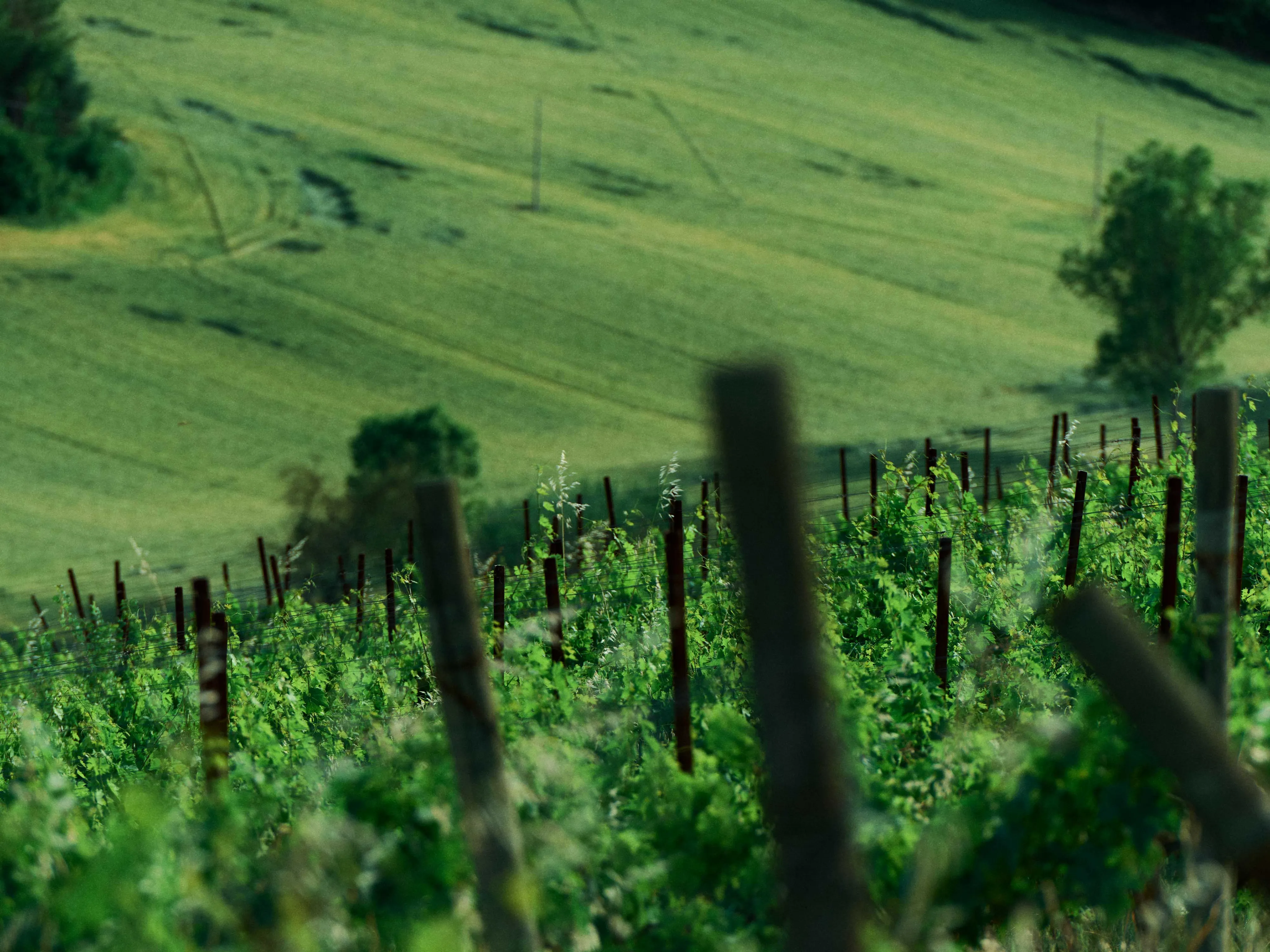
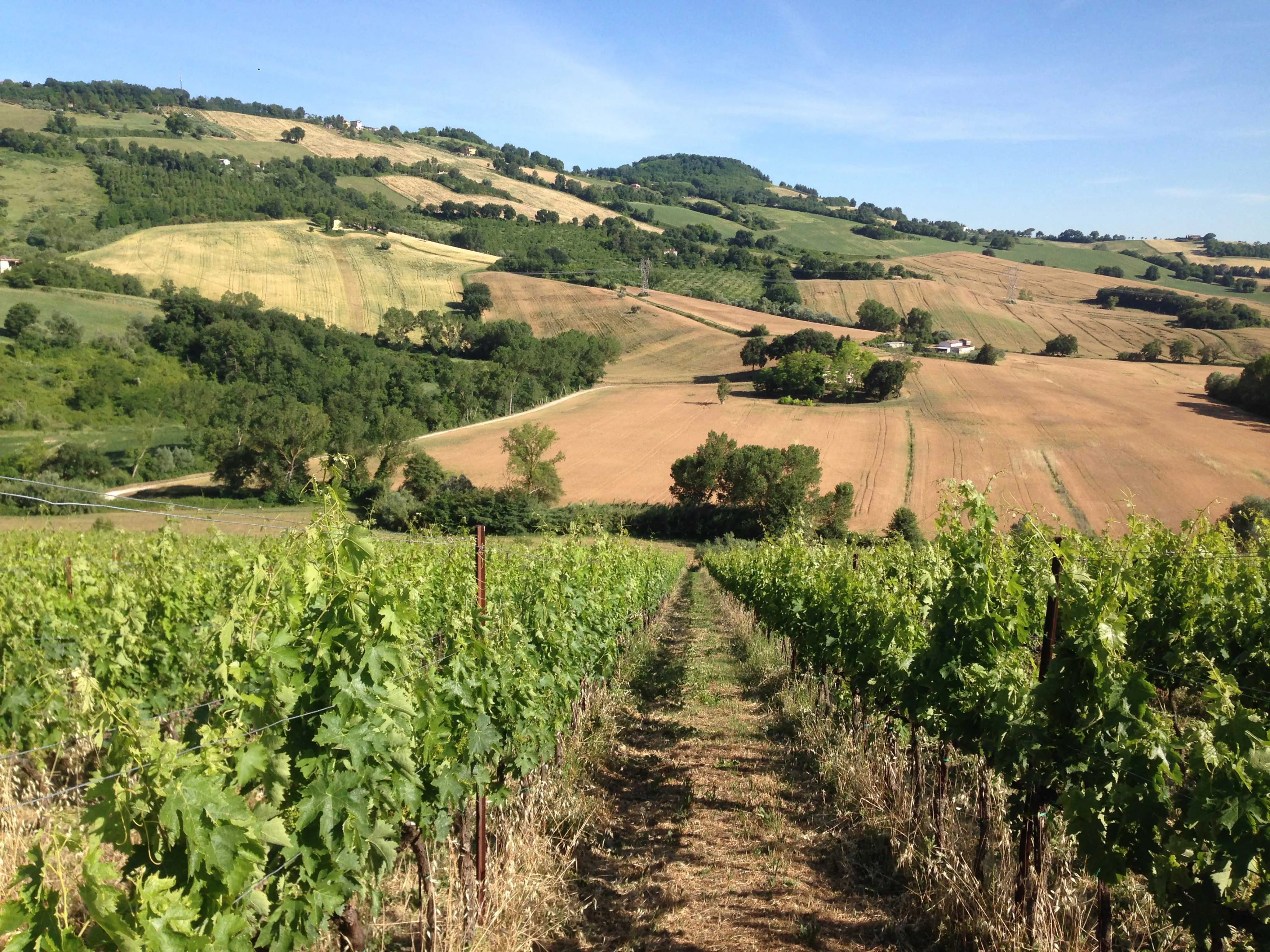
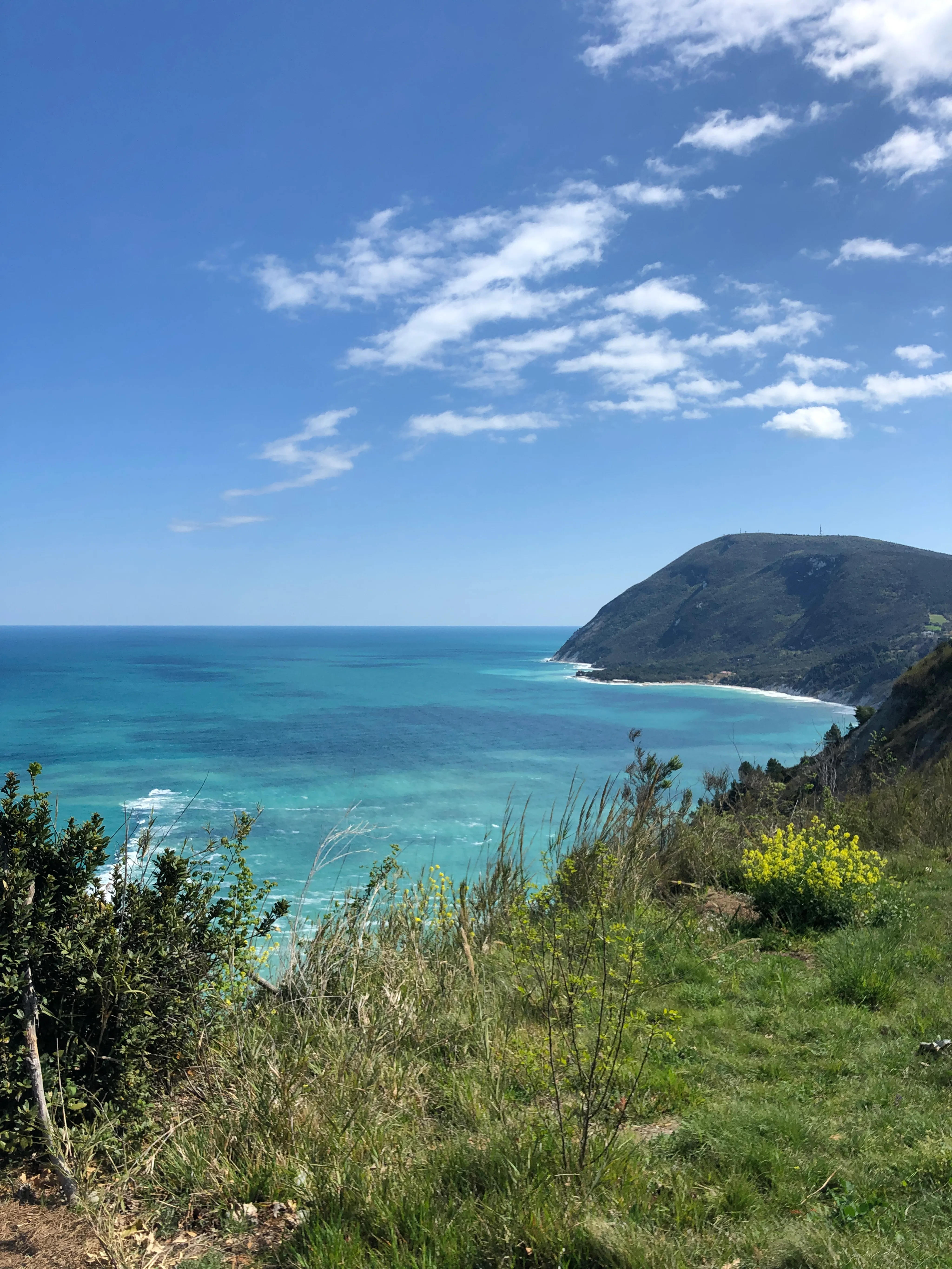
In the heart of Italy, where the Apennines open toward the Adriatic Sea, the Marche region reveals a landscape of striking contrasts. Here, the coastline rises into a white limestone cliffs that form Monte Conero, wrapped in Mediterranean vegetation of holm oak, oak, pine, myrtle, and strawberry trees. Beyond the mountain, further inland to the west, the medieval village of Offagna is surrounded by rolling hills that are home to our vineyards.
We cultivate approximately 15 hectares across two distinct areas, each expressing the richness and diversity of the Marche. Most of our vineyards lie within the Conero area, in the Conero DOCG and Conero DOC appellations, where limestone and clay soils, together with cooling sea breezes, allow Montepulciano to reveal its most authentic character.In Montecarotto, within the Verdicchio dei Castelli di Jesi appellation, we cultivate Verdicchio vines, deeply rooted in sandy and clay-rich soils.
LOCATION AND SOIL
The limestone, sandstone, and clay in the soil around the Monte come together to shape the distinctive character of Conero wines.
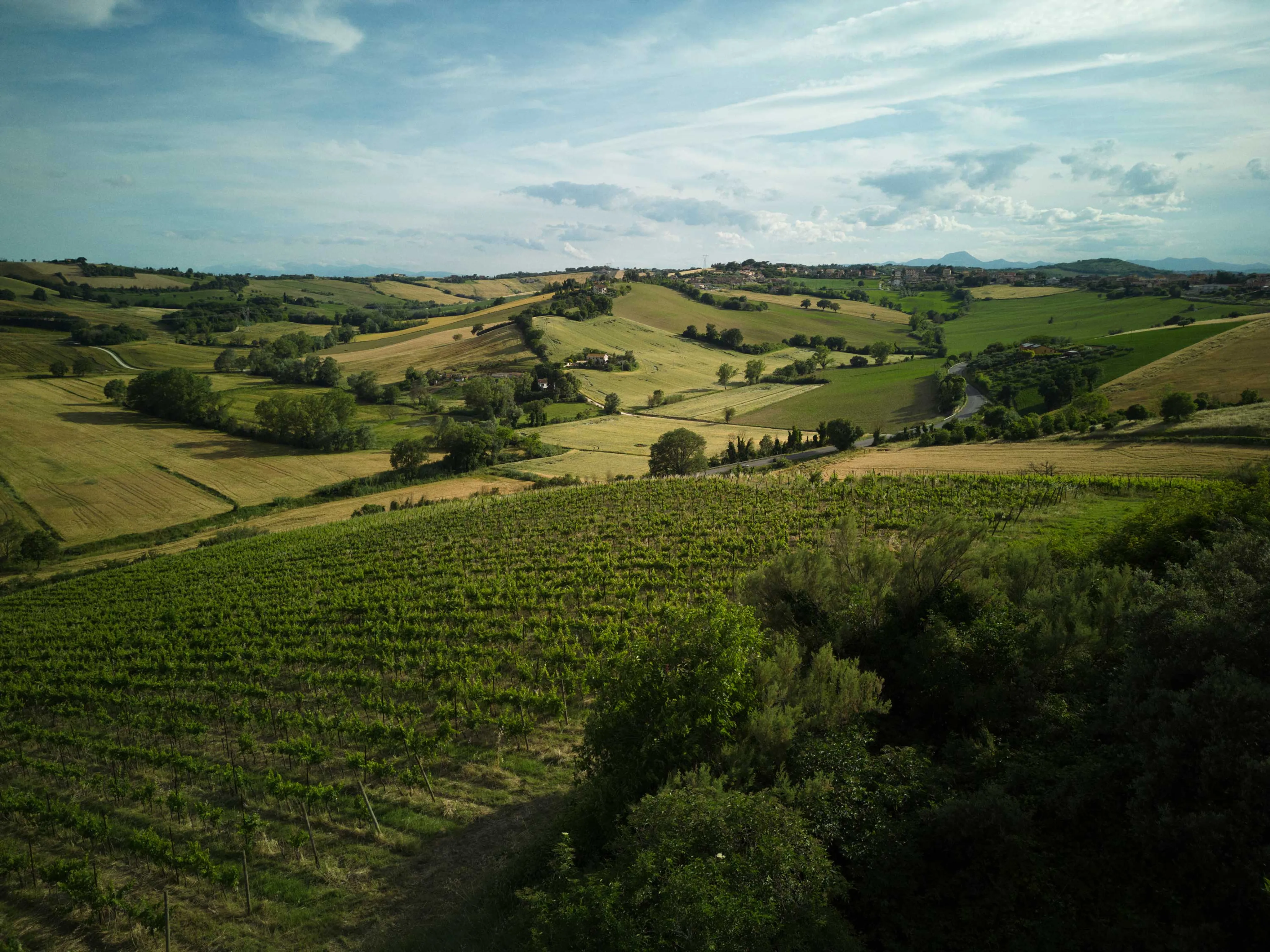
This unique mix is found in a narrow strip of land stretching between the towns of Numana, Sirolo, Castelfidardo, Osimo, Camerano, Ancona, and reaching Offagna, where our vineyards are located.
The climate of the area is mild temperate. The sporadic winter snowfalls bring a period of rest to the grapevine. Wind from the sea mitigate the rigours of winter, cool summer nights and contribute to the maintenance of a nice cool temperature and the acidity of the wine.
Rainfall occurs mainly in winter and early spring, while the clay in the soil acts as a a reservoir in the vineyards, gradually releasing it throughout the summer.
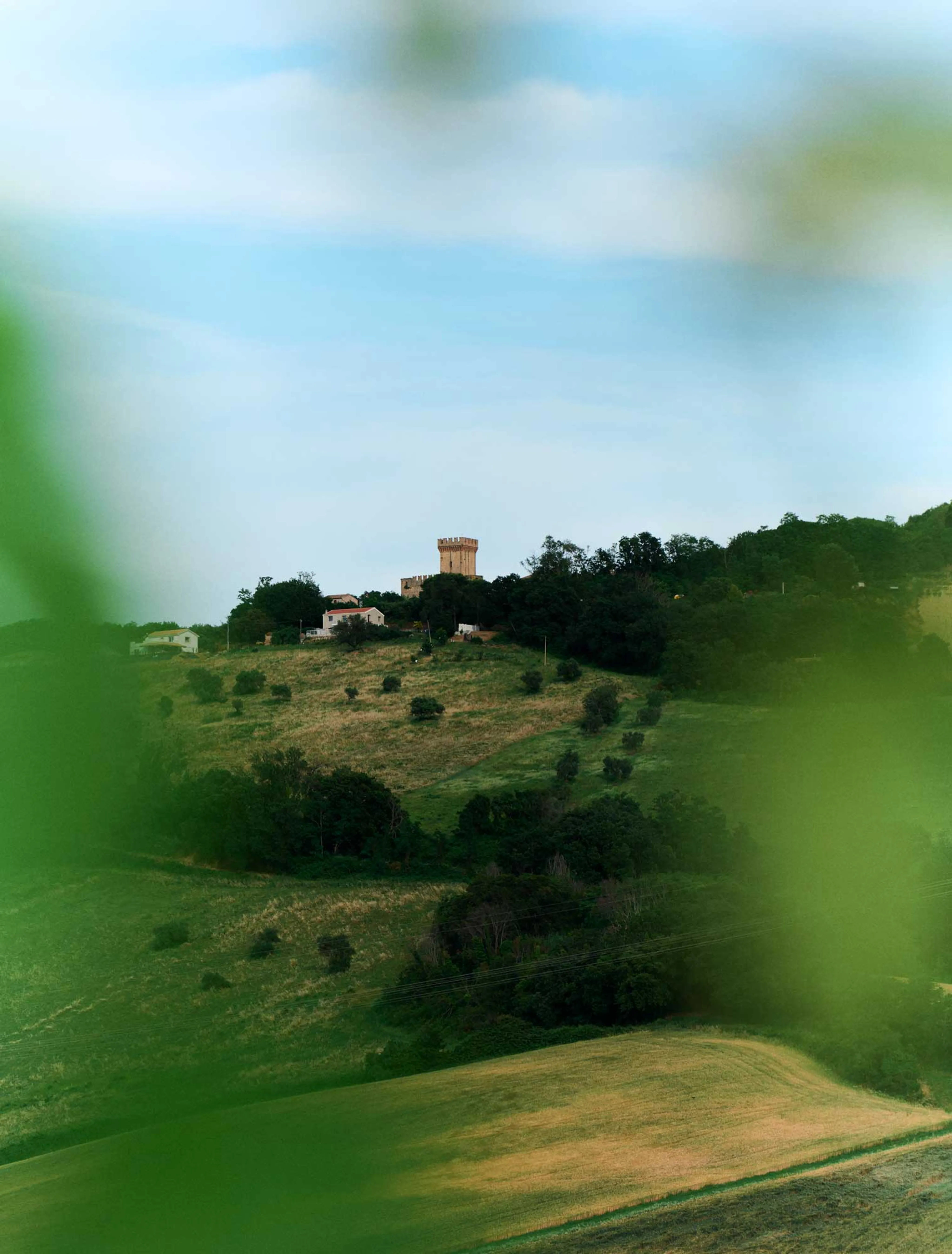
THE VILLAGE
Nestled in the countryside near the sea lies Offagna, a small medieval hilltown rising among the Marche hills like a gem preserved in time. Its ancient walls and the fortress, overlooking the landscape, tell a centuries-old story, while around it the hills unfold in rolling hills, covered with vineyard rows that naturally follow the contours of the terrain.
Here, nature and history coexist in harmony: the mild climate, mineral-rich soils, and the vineyards’ exposure create ideal conditions for grape cultivation. Yet it is above all the atmosphere of the place that makes it unique—a landscape that invites a slower pace and contemplation, where every detail seems to contribute to the quality and character of the wines that are born here.
Grapevines have been cultivated in this area for more than 5,000 years.
For so long, the human hand, foot, and hoe have shaped this land—gentle and rugged, generous yet demanding. Writers and scholars of ancient Rome, including Pliny the Younger and Columella, already praised the quality of the red wines from the Conero area. Much time has passed since then, yet the hands and mastery of farmers have continued to refine the cultivation of the vine, seeking in its fruit and juice one of life’s greatest pleasures.
Terroir
OUR VINEYARDS
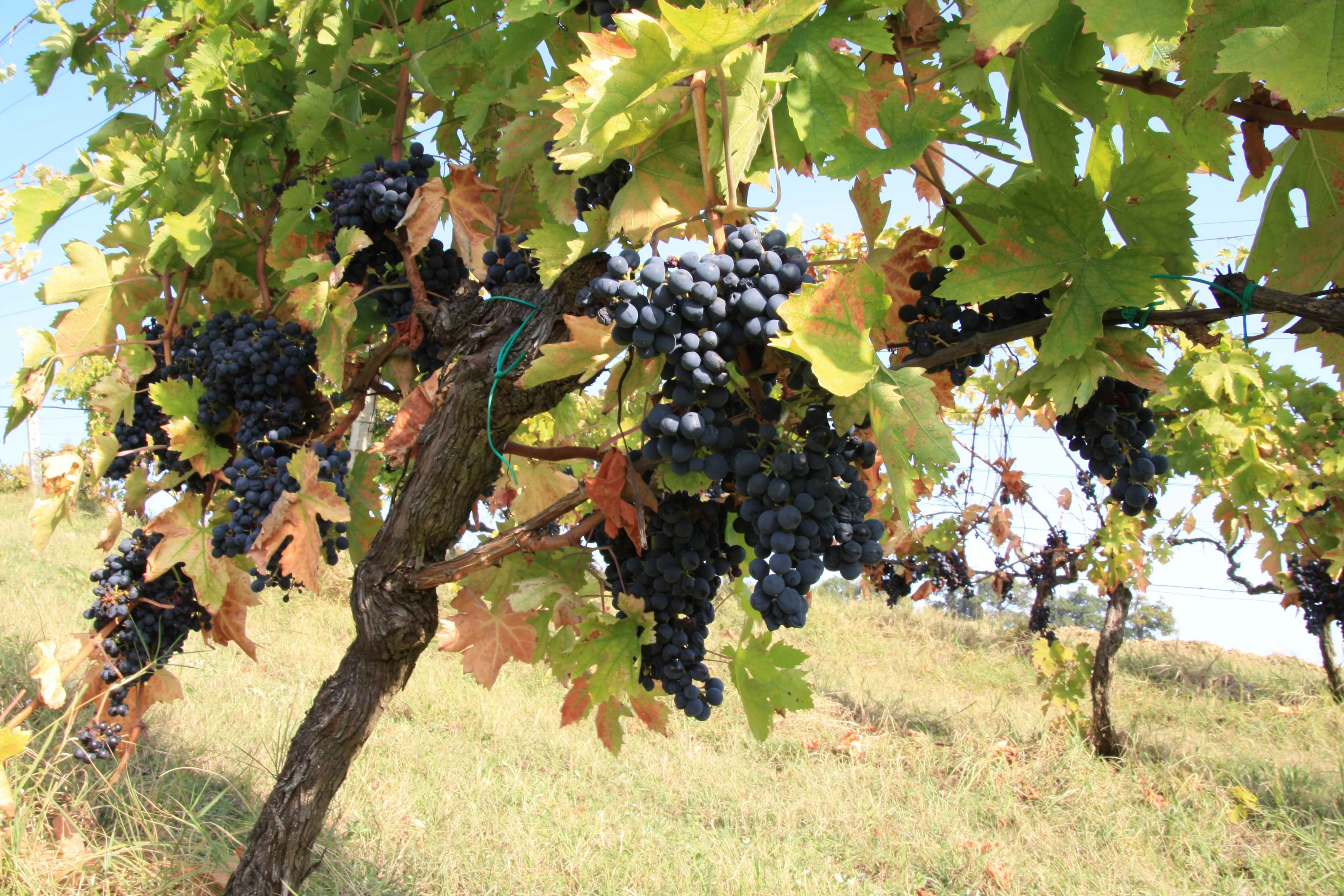
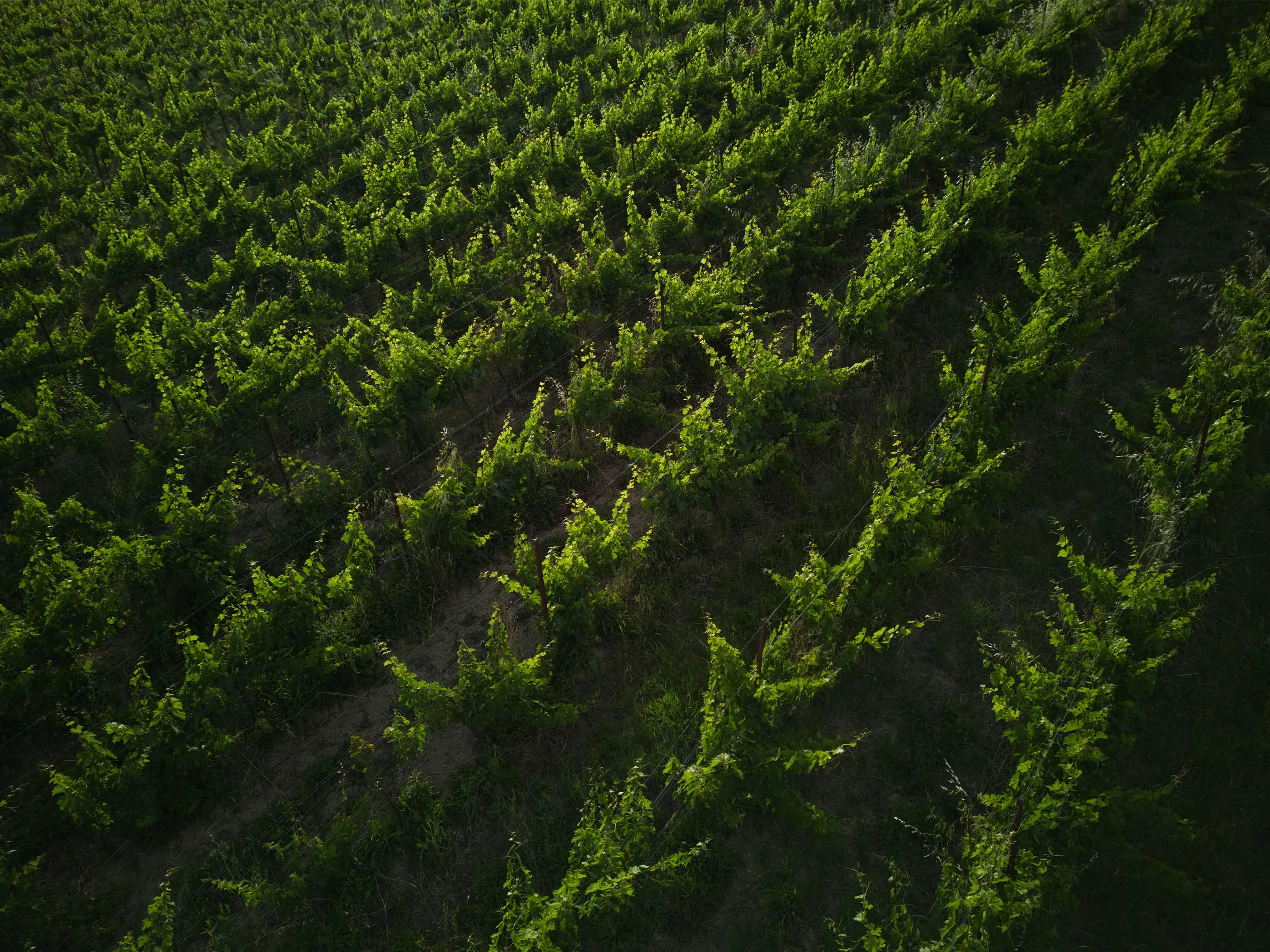
Just below the hill of Offagna lies the Grigiano hill, at approximately 250 meters above sea level, steep and green, covered with vineyards, olive trees, wheat, and sunflowers. It is framed by elm and oak trees, as well as hedges of hawthorn, dog rose, and blackberry. Here are our vineyards, planted with vines of the Montepulciano grape variety, long present in our territory and cultivated using top-up planting, a traditional technique for replacing individual vines within existing rows. These are ancient, indigenous vines, producing wines that express the distinctive character of the Conero terroir. The 5 hectares of the oldest vineyards, planted in 1971, are pruned according to the traditional double-cordon system, with 2,200 vines per hectare and a low yield of around 3,000 kg per hectare. The remaining 10 hectares of Montepulciano are trained using Guyot and spur-pruned cordon systems and are over 20 years old. A small Verdicchio vineyard is located to the northwest, in the municipality of Montecarotto, at 400 meters above sea level. This 25-year-old vineyard grows on clay and sandy soils.
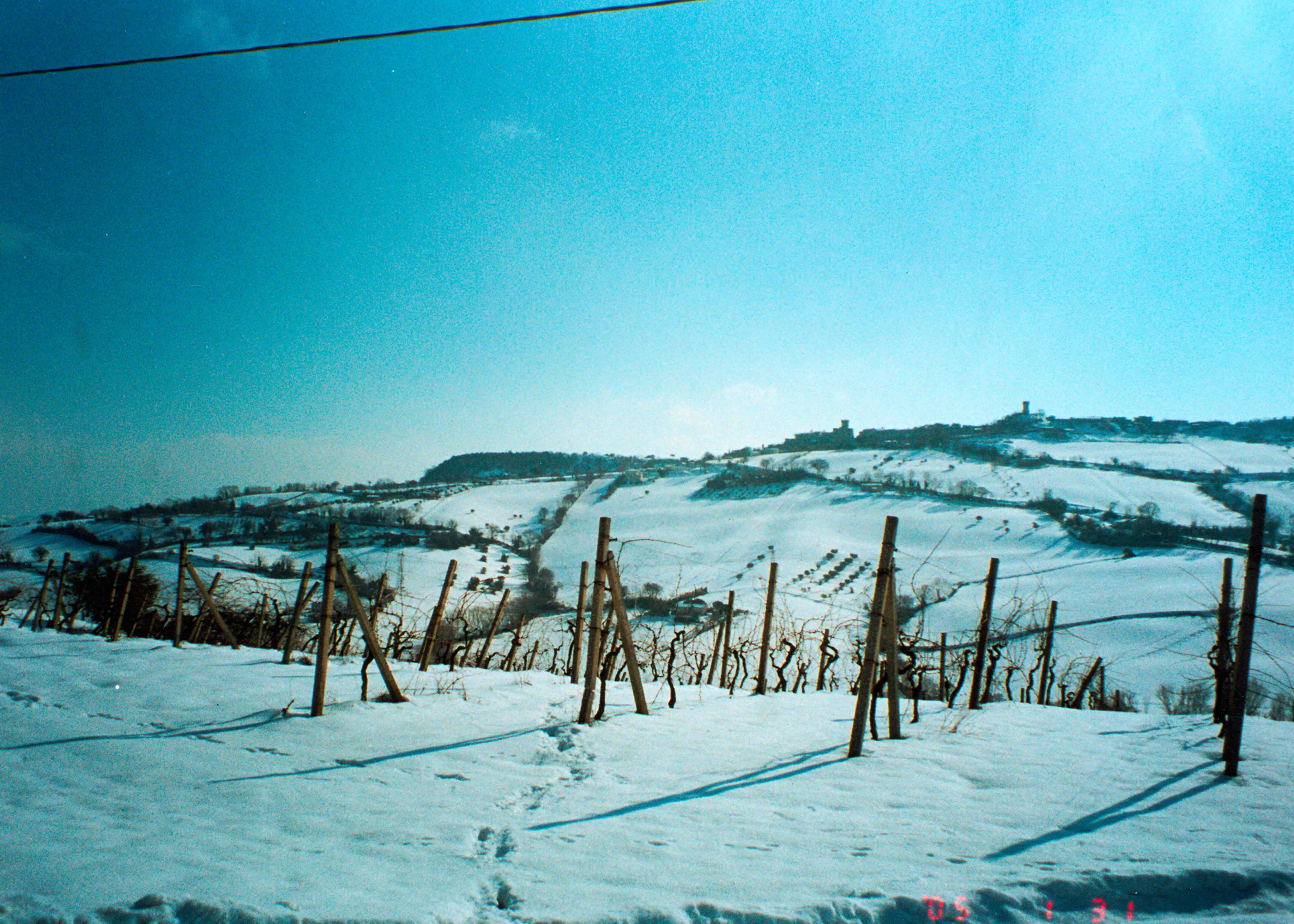
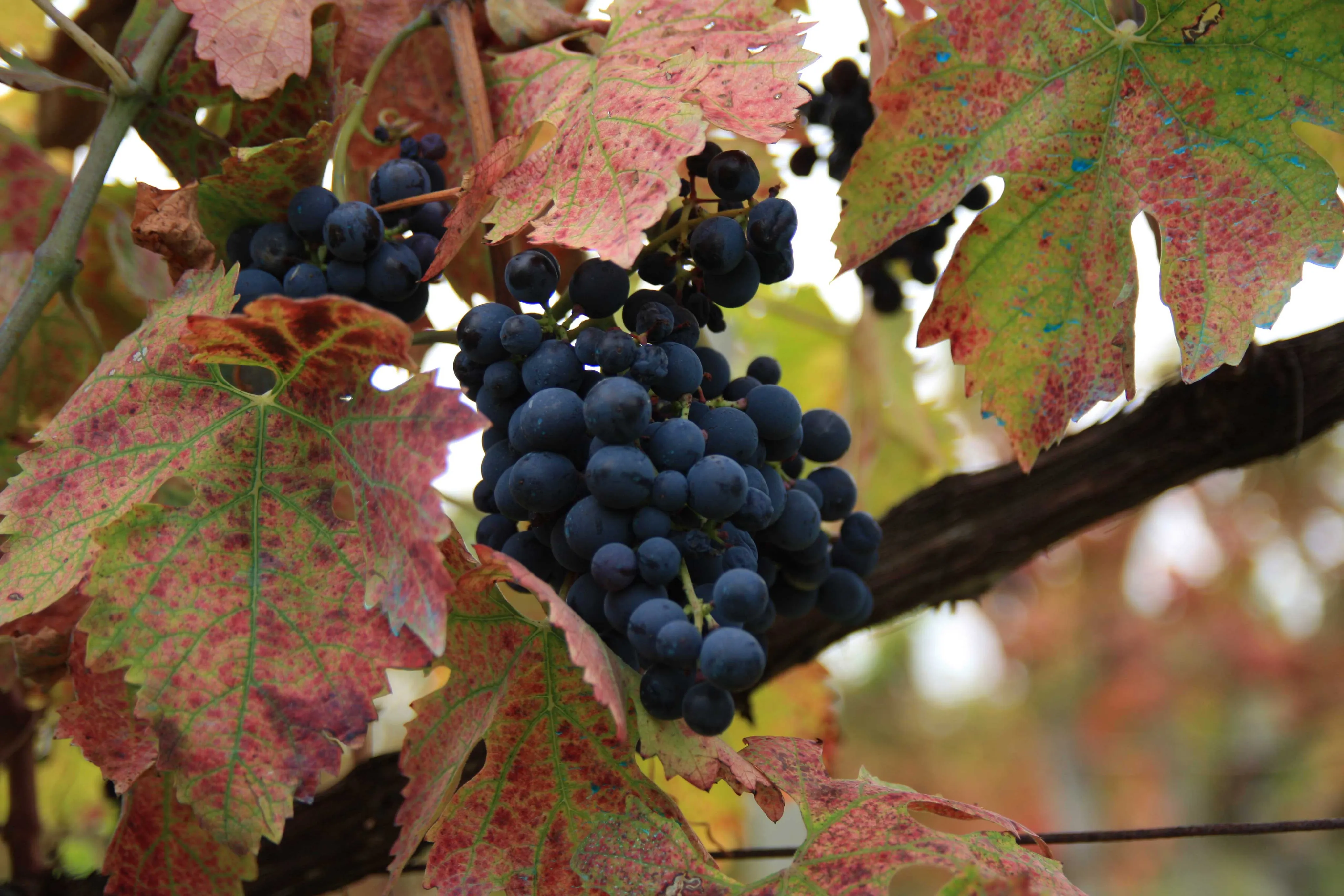
The leaves have now fallen, and all that remains of the vine are bare branches, broad, outstretched forms reaching toward the sky. With the canopy gone, wildlife has nowhere left to hide, and the buzzards take advantage of this, perching on the wooden posts at the ends of the rows in search of easy prey. Once the snow has melted, pruning and cane removal begin, with the aim of eliminating the old wood. Each vine is carefully examined, one by one.
In younger vineyards trained to spurred cordon, only a limited number of buds are retained on the permanent wood. The upper portion of the cane is removed by hand and laid on the vineyard floor, where it will later decompose. This is meticulous, highly precise work, requiring hundreds of hours per hectare and carried out from January through March. The next step is the sowing of green manure, a natural fertilisation method. In spring it will bloom, enriching the soil and supplying the vineyard with nitrogen.
Finally, still carried out entirely by hand, the tying secures the fruiting canes in their correct position along the trellis wires. It is a crucial season in which, despite the vines being in vegetative dormancy, careful work is undertaken in preparation for the seasons to come.
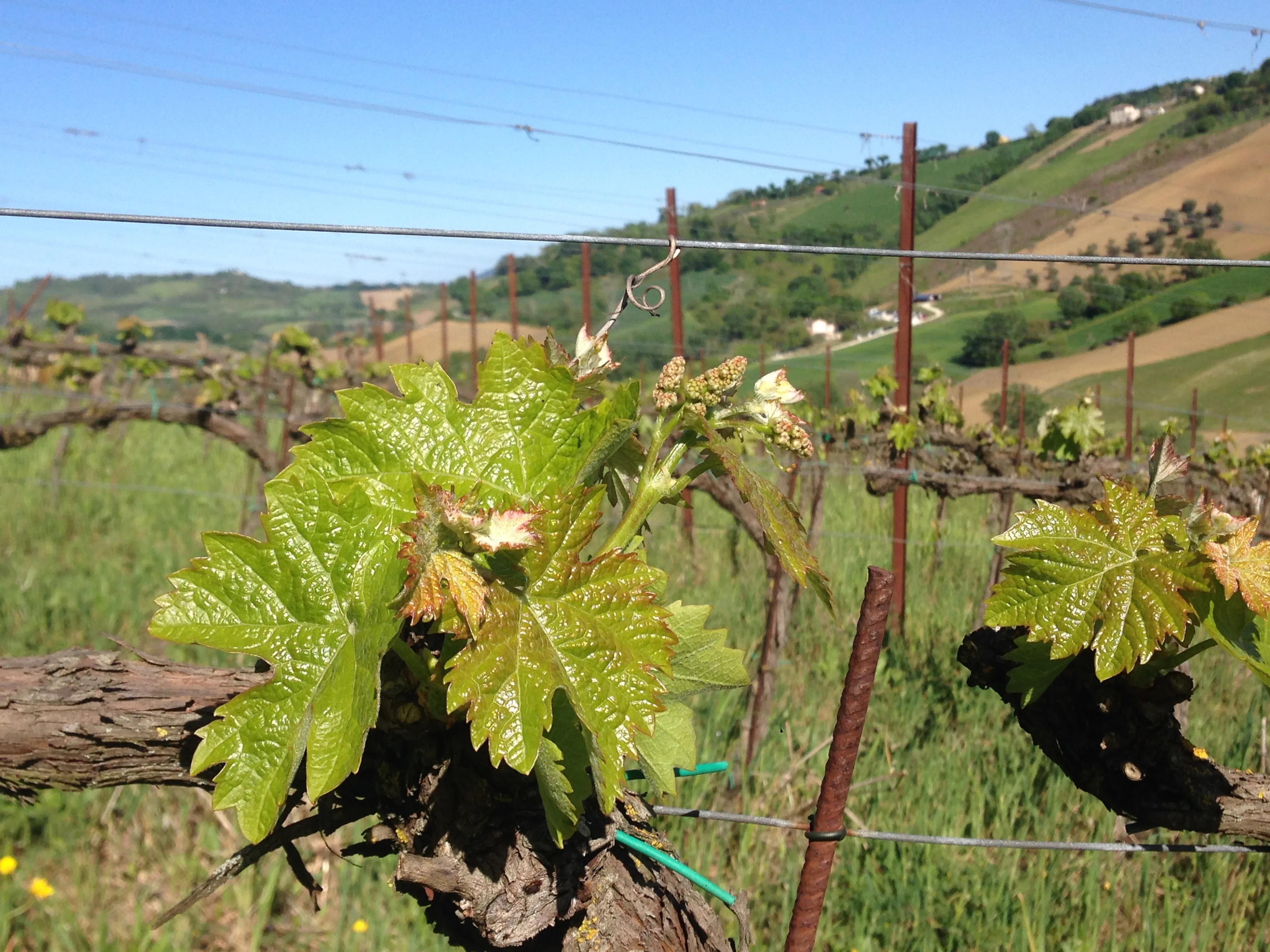
With the first warmth of spring, the pruned vine appears to weep: it awakens, flushing its vessels from root to tip, in a regenerative flow often referred to as The grapevine bleeding.
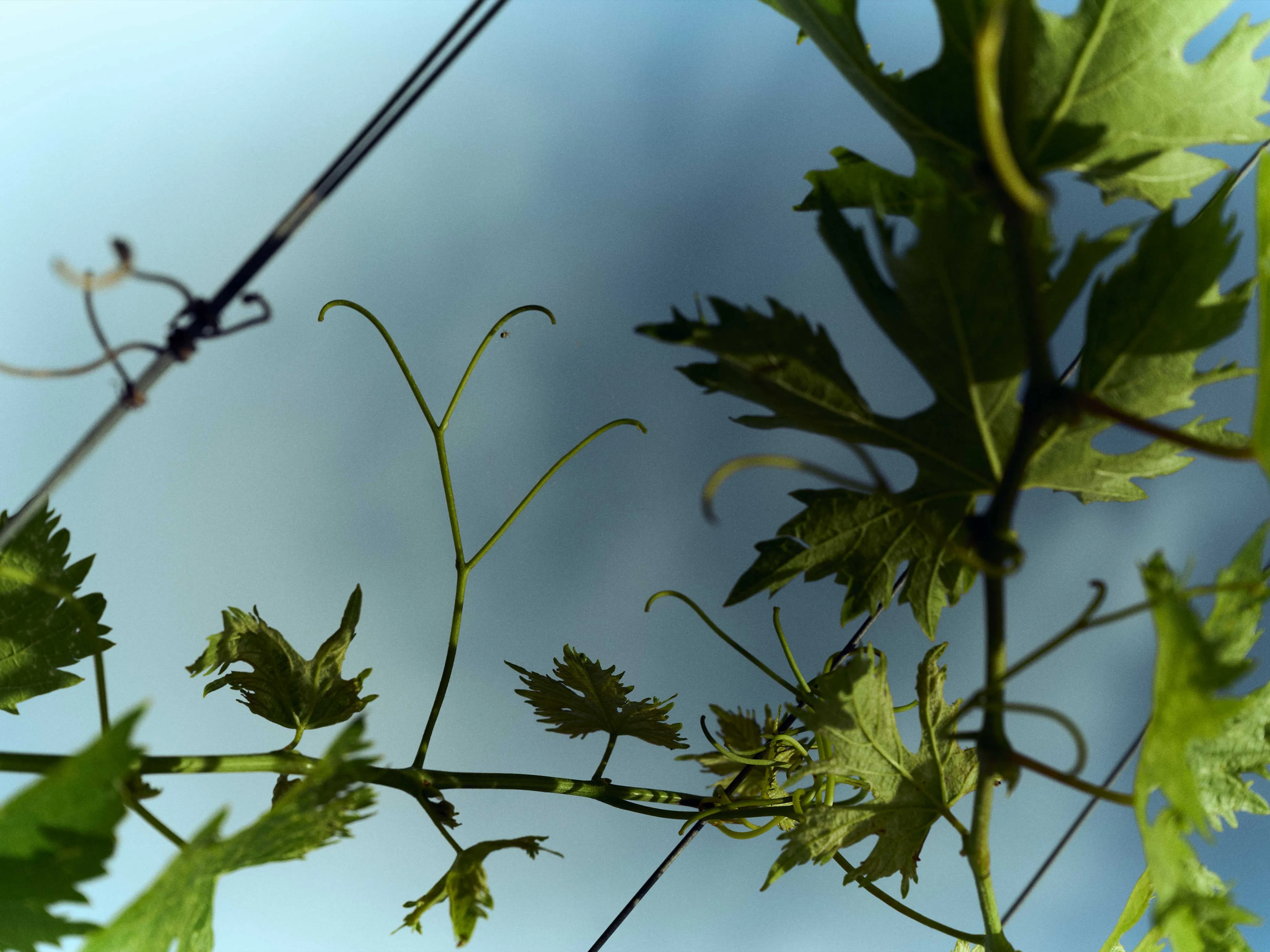
The first buds emerge along the cordons. Small, green and pink, they grow quickly, becoming leaves, then shoots, multiplying until, nestled among the folds of the foliage, small and tender clusters appear, destined to become red and juicy later in the season.
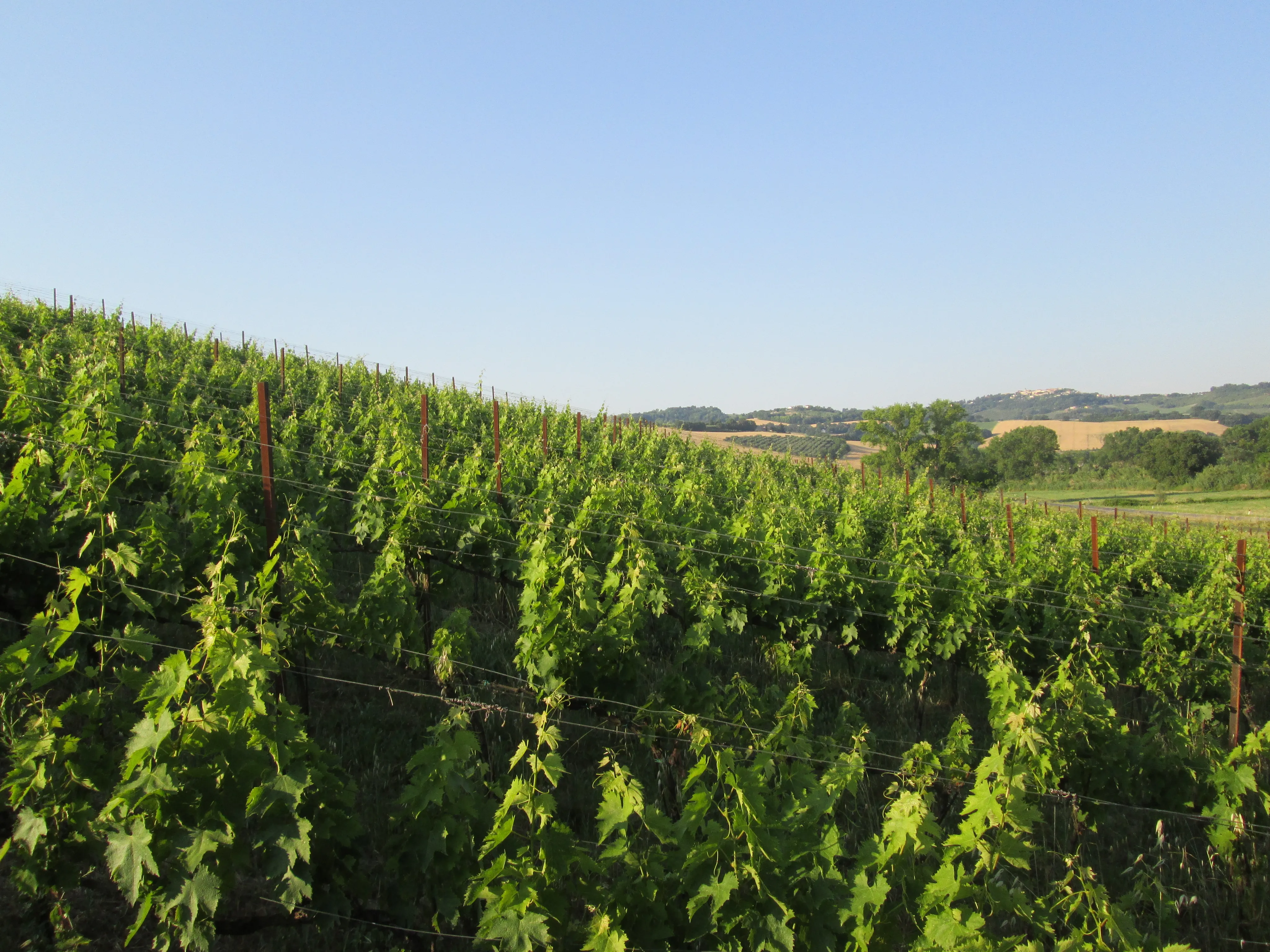
In April and May, the vine surges forward, growing at remarkable speed. Gentle rains and the mild warmth of the spring sun are enough to lengthen the shoots by several centimetres a day. The rows thicken, turning into a dense green canopy, while the leaves take on a deep, intense colour. The work in the vineyard follows the rhythm of the plants. When the leguminous cover crops used as green manure come into bloom, they release nitrogen from their roots into the soil. This is already the time for selection: suckering begins, with the removal of basal shoots, followed by mechanical cleaning of the lower part of the rows, and the green manure is also cut back. From April onwards, protective treatments generally begin to safeguard leaves and grape clusters from downy mildew and powdery mildew.
It is also time for shoot positioning and training. Fertile shoots are selected, double buds and forked shoots are removed. Later in the season, twin clusters will also be thinned, ensuring balanced sap flow and allowing the grapes to ripen evenly and to optimal maturity.
As the vineyards turn fully green, while white clover flowers, the red blossoms of sainfoin, daisies and chamomile bloom on the vineyard floor, the vine, too, enters its discreet flowering phase: the young clusters dress themselves in tiny white petals, which will soon drift away.
The heat has arrived, and the wheat fields now lie stretched out in golden expanses.
In the vineyard, our working hours change: we begin at dawn and work through to midday, after which the heat becomes too intense. The tips of the shoots are trimmed, removing the apical growth. The sap, which until now has nourished a lush canopy of broad green leaves, is redirected in summer toward the grape clusters. The berries begin to change colour: this is veraison. This is the moment to restore balance in the vineyard. Excess and weaker clusters are removed, carefully determining the right quantity of fruit that will be harvested in autumn. Fewer grapes per vine allow for more complete ripening, greater quality, and a higher concentration of compounds within each berry.
September arrives. The first rains bring some relief to the sun-cracked soil and wash the grapes.
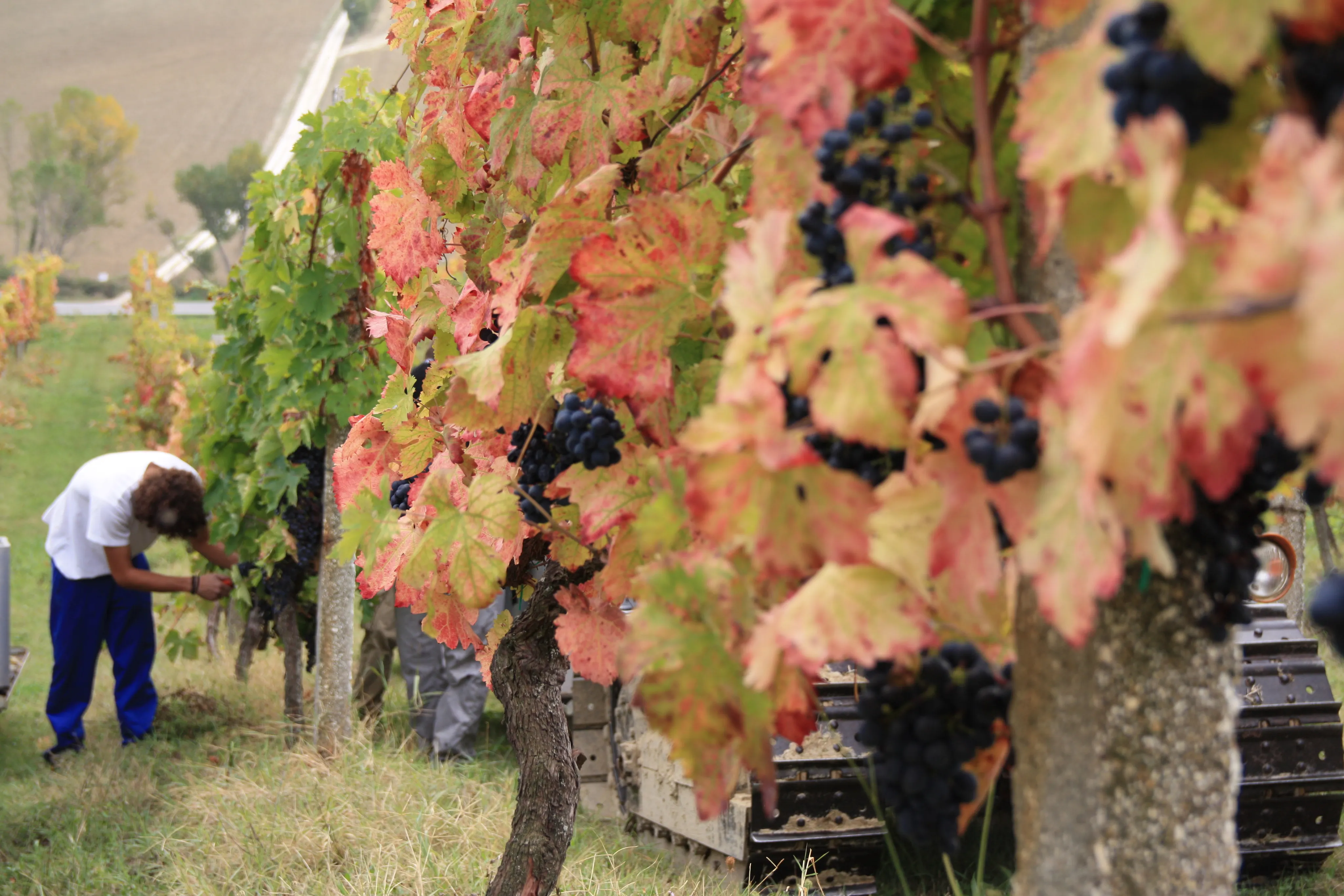
It is the most awaited moment of the year: the harvest. Each week, the rows are walked through to inspect the clusters, now almost all darkened. Samples of grapes are collected to evaluate ripeness, in order to determine the optimal time to begin picking. Meanwhile, the wagons are prepared, the crates for grape collection are washed, and the staff who will carry out the harvest, strictly by hand, are instructed. The vats are prepared, tractors and winery equipment are checked. During this period, the grapes mature rapidly: sugar levels and phenolic ripeness increase by roughly a quarter of a degree of sugar per day.
Finally, in October, the work begins: the grapes are ripe, and, with a bit of luck, mild sun accompanies our days. Work continues day after day, following the rhythm dictated by the sun. The grapes are brought into the winery and meticulously sorted, berry by berry.
The subsoiling closes this moment of collaboration and joy, as the earth is turned over and the vineyard rests, awaiting the start of the next cycle.